
Is Eating Fruit Like Apples Healthy for Teeth?
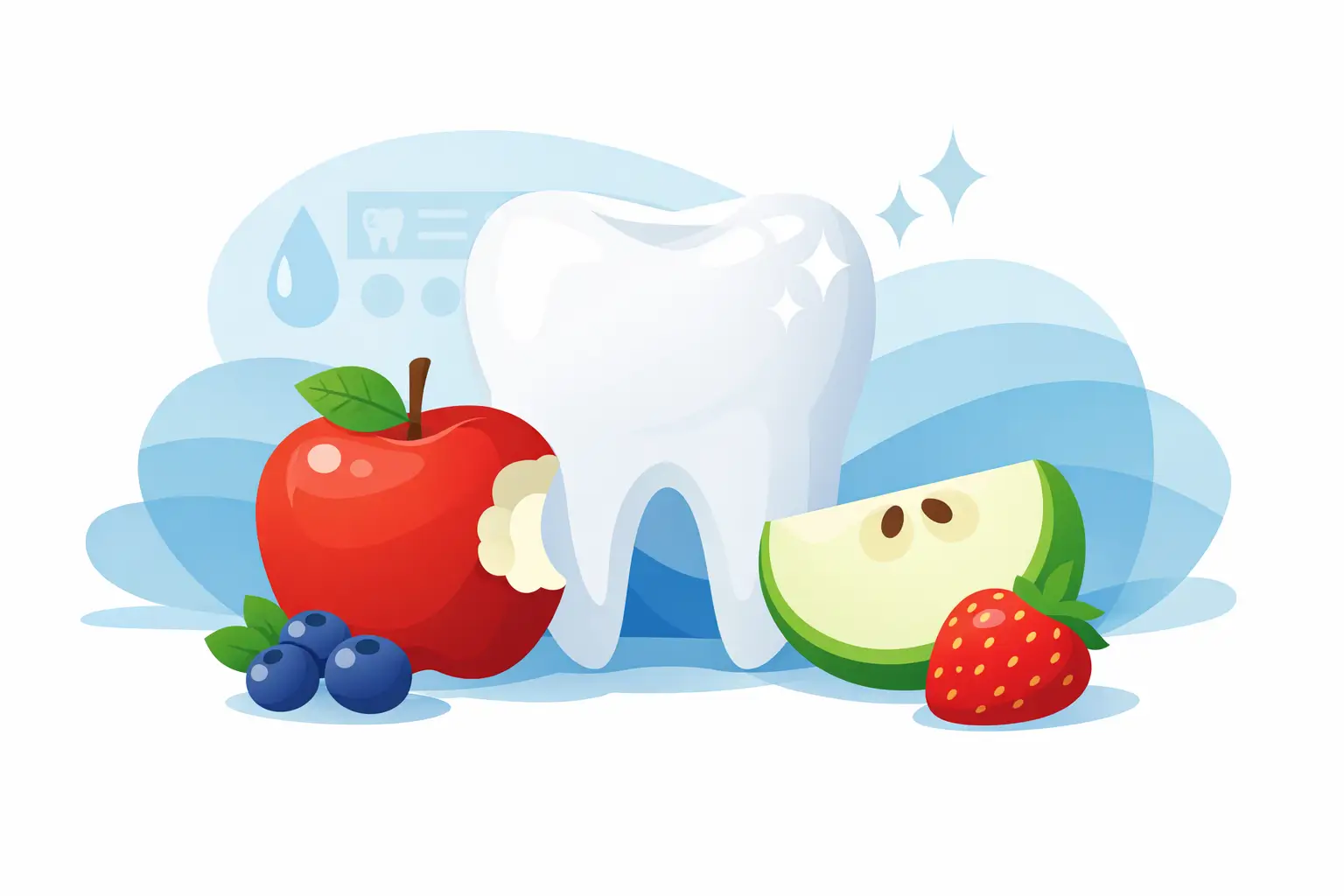
Whole fruit can be part of a healthy diet. Apples also contain natural sugars and acids, so how often you snack on fruit and what you drink with it are worth considering.
An apple after lunch feels like a healthy choice, and in many ways it is. But when patients ask whether eating fruit like apples healthy for dental health is really true, the honest answer is a little more nuanced than the old saying about keeping the doctor away. Fruit can support general health and even help stimulate saliva, yet it also contains natural sugars and acids that your teeth still have to manage.
For most people, apples can be part of a tooth-friendly diet. They are far better as a regular snack than lollies, soft drink, or sticky processed foods. Still, they are not a substitute for brushing, flossing, fluoride, or regular check-ups. If you have sensitive teeth, dry mouth, a high decay risk, or gum problems, the details of how and when you eat fruit matter more than you might think.
Eating fruit like apples healthy for dental health - why people say yes
Apples have earned a reputation as a good food for teeth because they do a few useful things. Their firm texture encourages chewing, and chewing helps stimulate saliva. Saliva is one of your mouth's best natural defences. It helps wash away food particles, dilute acids, and support the repair of early enamel damage.
Apples also contain fibre and water, which can make them feel fresher and cleaner than softer, stickier snacks. Compared with foods that cling into grooves and between teeth, a crisp apple is less likely to sit around for hours feeding harmful bacteria.
There is also the bigger picture. A diet rich in whole fruit tends to be associated with better overall health than a diet high in ultra-processed snack foods. People who choose an apple over a biscuit are usually making a better decision for their body and, in many cases, for their teeth as well.
That said, "better" does not mean "harmless". Dental health is rarely about a single food being good or bad. It is usually about patterns.
Where fruit can still cause dental problems
All fruit contains natural sugars. Your mouth bacteria do not particularly care whether sugar came from a chocolate bar or a very ripe banana. They feed on sugar and produce acids, and those acids can contribute to tooth decay.
Apples are also mildly acidic. On their own, they are not as erosive as things like soft drink, sports drinks, or frequent lemon water, but repeated acid exposure over the day can still wear enamel down over time. This is especially relevant if you graze constantly, sip acidic drinks, or already have signs of enamel erosion.
The other point is texture. Fresh apples are usually less of a problem than dried fruit. Sultanas, dried apple slices, dates, and fruit straps may sound wholesome, but they are concentrated in sugar and tend to stick to teeth. For children in particular, that combination can quietly increase decay risk.
Fruit juice is another common issue. Even when it is labelled natural, it is often high in sugar and acid without the fibre of whole fruit. Sipping juice over an hour on the drive to school or at a desk is much harder on teeth than eating a whole apple with a meal.
Whole apples are not the same as apple juice
This is where many healthy habits become less healthy for teeth. Biting into an apple takes time, stimulates chewing, and is usually finished in a few minutes. Apple juice is easier to consume quickly, often in larger amounts, and can bathe the teeth in sugar and acid.
Smoothies can sit somewhere in the middle. If they contain whole fruit and are had with a meal, they may be reasonable from time to time. But if they are sweet, sipped slowly, or packed with acidic ingredients, they can behave more like a dessert than a protective snack.
Eating fruit like apples healthy for dental health depends on timing
One of the biggest factors is how often your teeth are exposed, not just what you eat. If you have an apple with lunch, your saliva and your normal meal pattern help your mouth recover. If you nibble at fruit all afternoon, the teeth are under repeated acid attack.
This matters because your enamel needs breaks. Every time you eat something sugary or acidic, the mouth becomes more acidic for a period. Frequent snacking means the teeth may spend much of the day without enough recovery time.
For that reason, fruit is usually kinder to teeth when it is eaten with meals rather than constantly between them. If you do want fruit as a snack, it can help to have it in one sitting rather than picking at it over a long stretch.
Who needs to be more careful?
Some people can eat fruit fairly freely with few dental consequences. Others need a more tailored approach.
Children are one group to watch, not because fruit is bad, but because snack patterns can drift. A lunchbox filled with dried fruit, fruit bars, and juice boxes may look healthy on paper while still exposing young teeth to lots of sugar and acid. Whole fruit and water are usually the safer everyday option.
Adults with dry mouth also need extra care. Saliva is essential for buffering acids, so if your mouth is dry from medication, stress, mouth breathing, or health issues, even ordinary foods can cause more trouble.
People with braces or aligner attachments may find some fruits get trapped more easily around appliances. In that case, cleaning well after eating matters just as much as the food choice itself.
And if you already have worn enamel, gum recession, or sensitive teeth, acidic foods can trigger discomfort more quickly. This does not mean avoiding fruit altogether. It means being strategic.
Practical ways to make fruit friendlier to teeth
A few simple habits can make a real difference without making eating feel restrictive. Choose whole fruit more often than juice or dried fruit. Eat fruit at mealtimes or as a single snack rather than grazing. Drink water afterwards to help rinse the mouth. Wait a little before brushing if your teeth feel acidic or sensitive, as brushing straight after acidic food can add to enamel wear.
Pairing fruit with other foods can help too. Having apple slices with cheese or yoghurt may reduce the overall impact compared with fruit on its own. The aim is not perfection. It is reducing repeated exposure and giving your teeth a fair chance to recover.
What about the idea that apples clean your teeth?
There is a grain of truth here, but it is easy to overstate it. Apples can help stimulate saliva and may dislodge some loose debris through chewing, but they do not clean teeth the way brushing and flossing do. They cannot remove plaque properly, clean along the gumline, or protect teeth with fluoride.
So yes, an apple is a sensible snack for many people. No, it is not a toothbrush in disguise.
This distinction matters because people sometimes rely on healthy foods to balance out weak oral hygiene. Unfortunately, decay and gum disease can still develop in people with otherwise excellent diets if plaque is left undisturbed day after day.
The dental view: healthy food, realistic advice
At a conservative dental practice, the goal is not to scare people away from nutritious foods. It is to help you keep your natural teeth for as long as possible with practical, sustainable advice. That means recognising that fruit belongs in a healthy diet while also being honest about the role of sugar frequency, acid exposure, saliva, and home care.
If you are unsure whether your diet is affecting your teeth, the signs can be subtle. Early enamel wear, small decay areas between teeth, lingering sensitivity, dry mouth, or inflamed gums can all hint that something needs adjusting. A careful check-up can usually tell us whether your current habits are working for you or whether a few small changes would reduce risk.
For families around Thornleigh, this kind of guidance is often most useful when it is specific. A child who snacks all afternoon, an adult sipping fruit tea at work, and an older patient taking medications that dry the mouth do not need the same advice, even if they all eat fruit every day.
An apple is still a good choice more often than not. The healthier question is not whether fruit is perfect for teeth. It is whether your overall routine gives your teeth enough support - through timing, water, fluoride, cleaning, and regular preventive care - so healthy foods stay part of the solution rather than quietly becoming part of the problem.
Related at Pure Dental Care: Check-up and clean and contact our Thornleigh clinic.