

Dental Crown Procedure Steps Explained Clearly
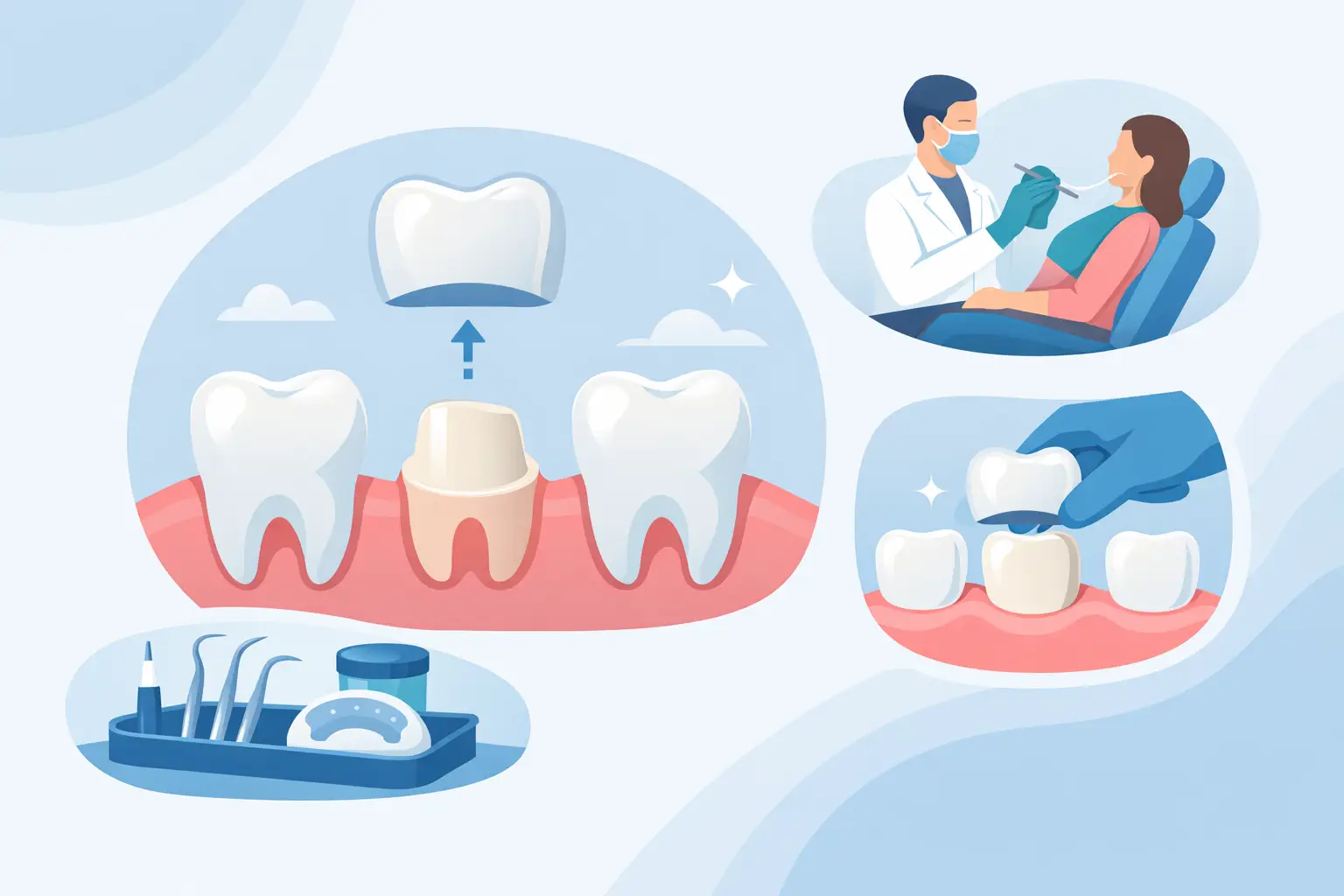
If your dentist recommends a crown for a cracked or heavily filled tooth, it helps to know what each appointment involves. This guide walks through the steps, from checking the tooth to fitting the crown.
A crown is not simply a cap placed over a tooth. It is a carefully planned restoration designed to protect what remains of your natural tooth while restoring its strength, shape and appearance. Understanding the dental crown procedure steps can make the process feel far less daunting, particularly if you have been living with a cracked, heavily filled or painful tooth.
At Pure Dental Care, the approach is always conservative. A crown may be an excellent solution, but it is not automatically the first solution. Your dentist will first look at whether the tooth can be preserved with a smaller restoration, then explain the options clearly so you can make an informed choice.
When might a dental crown be recommended?
A dental crown covers the visible part of a tooth above the gumline. It may be recommended when a tooth has lost too much structure to be reliably repaired with a filling alone. This can happen after a large fracture, extensive decay, repeated replacement fillings or root canal treatment.
Crowns can also be used to protect a worn tooth, support a bridge, cover a dental implant or improve the shape and colour of a tooth in selected cosmetic cases. The right treatment depends on how much healthy tooth is left, the condition of the root and gums, your bite, and where the tooth sits in the mouth.
For example, a small crack may be managed with a filling or onlay, while a back tooth with a large crack running through an old filling may need the fuller protection of a crown. Careful diagnosis avoids both undertreating a vulnerable tooth and removing more tooth structure than necessary.
Dental crown procedure steps: from assessment to fitting
1. Examination, scans and treatment planning
Your first appointment begins with an examination of the tooth, surrounding gums and bite. Your dentist may take X-rays and, where useful, use digital scanning technology to see the tooth in detail. These checks help identify decay beneath an old filling, cracks, infection around the root, gum problems or signs that the nerve has been affected.
This is also the time to discuss your goals and practical considerations. You may talk about the material most suitable for your tooth, the expected number of visits, costs, health fund cover and whether a temporary crown will be needed. There is no benefit in rushing this stage. A well-planned crown should fit your mouth, not just the tooth in isolation.
If the tooth is painful, the dentist will determine why. A crown protects tooth structure, but it does not treat an infected nerve. If root canal treatment is needed, that is usually completed before the final crown is fitted.
2. Numbing and preparing the tooth
At the preparation appointment, the tooth and nearby gum are usually numbed with local anaesthetic. Most patients feel pressure and vibration rather than pain. If you are anxious, tell the team before treatment begins. Pauses, clear explanations and a slower pace can make a real difference, and you remain in control throughout the appointment.
Your dentist then gently reshapes the tooth to create room for the crown. The amount removed varies. A tooth with a large existing filling or broken areas may need relatively little additional shaping, while a tooth that is intact but needs a crown requires more careful reduction to make space for the chosen material.
Any decay or weak filling material is removed first. In some cases, the tooth needs to be built up with a bonded core before the crown can sit securely. If there is not enough healthy tooth above the gumline, further treatment may be discussed. This could include gum treatment, a post after root canal therapy, or a different restorative option. These decisions are individual, not routine add-ons.
3. Digital scan or impression
Once the tooth is prepared, a precise record is taken so the crown can be made to fit accurately. Modern digital scanning uses a small camera to create a detailed 3D image of the teeth and bite. Some cases may still require a conventional impression material, depending on the clinical situation.
Your dentist will also record the shade of nearby teeth when the crown will be visible in your smile. A natural-looking result is about more than choosing a white shade. Translucency, surface texture, tooth shape and the colour of neighbouring teeth all matter.
4. Temporary protection, if required
For many traditional crowns, a temporary crown is placed while the final restoration is made by a dental laboratory. This temporary protects the prepared tooth, helps maintain spacing and allows you to function normally in the meantime.
Temporary crowns are not as strong as permanent ones. Avoid very sticky foods such as toffee and chewing hard foods on that side where possible. Brush gently around the gumline, and slide floss out from the side rather than pulling it straight up, which can loosen the temporary crown.
With advanced Sirona digital technology, some suitable crowns may be designed and made in a single appointment. Same-day treatment can be convenient, but it is not automatically the best choice for every tooth. Complex bite situations, teeth near the front of the mouth and cases requiring more detailed shade work may benefit from a laboratory-made crown. Your dentist can explain the trade-off clearly.
5. Trying in and bonding the final crown
At the fitting appointment, the temporary crown is removed and the tooth is cleaned. The final crown is tried in before it is bonded. Your dentist checks the fit around the edges, the contact with adjacent teeth, the appearance and how your teeth meet when you bite.
Small adjustments are normal. A crown should not feel high when you close your teeth together, and floss should pass through the contact with a gentle resistance. Once these checks are complete, the crown is bonded or cemented into place.
You may notice the crown feels slightly different at first because its shape is new, particularly if the original tooth was chipped or worn. That awareness usually settles within a few days. If your bite feels uneven, or you cannot chew comfortably after the numbness wears off, contact your dentist. A simple adjustment can protect both the crown and the opposing tooth.
What happens after a crown is fitted?
Mild gum tenderness or temperature sensitivity can occur for a short period, especially if the tooth was already irritated before treatment. Over-the-counter pain relief may be suitable for some people, but follow the directions on the packet and ask your dentist or pharmacist if you are unsure.
Contact the clinic promptly if you develop increasing pain, swelling, a loose crown, a crack, or a bite that continues to feel wrong. Do not wait and hope it settles if the discomfort is worsening. Early attention is usually simpler and more comfortable.
A crowned tooth can still develop decay at the edge where the crown meets the natural tooth. It can also be affected by gum disease. Daily brushing with fluoride toothpaste, cleaning between the teeth, regular check-ups and professional cleans remain essential. If you clench or grind your teeth, a custom bite splint may help protect the crown and your remaining natural teeth from excessive force.
How long does the process take?
A straightforward crown often takes two appointments over one to three weeks when a laboratory is involved. A same-day crown may be possible for selected cases, while teeth needing root canal treatment, gum care or additional rebuilding will take longer.
The best timeline is one that gives the tooth the care it needs. If you have a broken tooth or lost filling, prompt assessment can help prevent a manageable problem from becoming a dental emergency.
A crown should feel like part of your smile
The aim of crown treatment is not to make your mouth feel more dental. It is to help you eat, speak and smile with confidence while preserving a compromised tooth for as long as possible. If you are worried about a damaged tooth, a calm assessment can give you clear options before the problem has a chance to grow.
Related at Pure Dental Care: Dental crowns and contact our Thornleigh clinic.