
A Guide to Routine Dental Checkups
A routine check-up is a chance to raise any concerns and find out whether anything needs attention. Here’s what usually happens at the appointment and what you can ask before agreeing to treatment.
If you have ever put off an appointment because you were worried about what the dentist might find, you are not alone. A good guide to routine dental checkups should do the opposite of adding stress - it should make the process feel clear, manageable, and firmly in your control.
For many people, a check-up is not really about having work done. It is about staying ahead of problems while they are still small, easier to treat, and often less expensive. That matters whether you are booking for yourself, bringing in a child, helping an older parent, or returning to the dentist after a long gap.
Why routine dental checkups matter
Routine dental checkups are one of the simplest ways to protect your natural teeth for the long term. Most dental problems do not begin with obvious pain. Early decay, worn fillings, gum inflammation, cracks, grinding damage, and even some infections can develop quietly.
By the time something starts to hurt, treatment is often more involved than it needed to be. A regular check-up gives your dentist the chance to spot early changes, monitor anything that is borderline, and recommend the least invasive option at the right time.
That does not mean every tiny issue needs treatment straight away. In many cases, the best approach is careful review, preventive advice, and watching an area over time. That is especially important if you value conservative dentistry and want to avoid being pushed into larger procedures before they are truly necessary.
What happens at a routine dental checkup
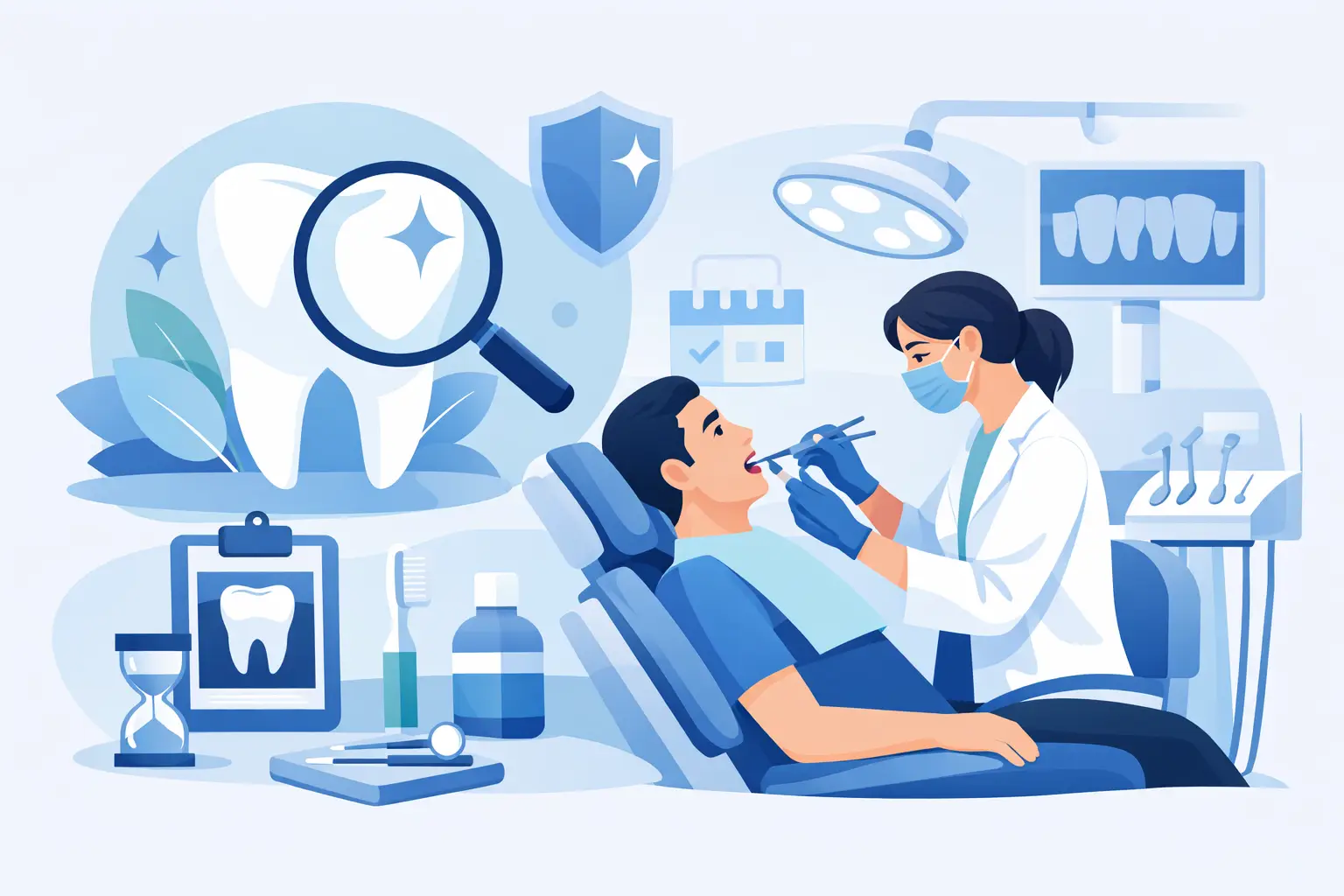
A guide to routine dental checkups is most useful when it explains what actually happens in the chair. While every patient is different, most visits follow a fairly straightforward pattern.
A conversation first
A proper check-up usually begins with a short discussion about your dental health, medical history, and any recent changes. You might mention sensitivity, bleeding gums, jaw soreness, bad breath, headaches, broken teeth, or trouble chewing. If you are anxious, this is also the right time to say so.
That conversation matters more than many people realise. It helps your dentist understand not just your teeth, but the bigger picture - medications, health conditions, dry mouth, pregnancy, sleep issues, and habits such as grinding can all affect treatment decisions.
Examination of teeth, gums, and mouth
Your dentist will then examine your teeth, gums, bite, and soft tissues inside the mouth. They are checking for decay, failing fillings, cracks, wear, signs of gum disease, infection, and changes in the tongue, cheeks, and other tissues.
This is not just a hunt for cavities. It is a broader health review of the mouth and surrounding structures. If you clench or grind your teeth, for example, that can show up as wear, fractures, jaw tenderness, or headaches, even when the teeth themselves look clean.
X-rays when they are needed
Not every visit requires X-rays, but they are often an important part of preventive care. Some problems sit between teeth, under existing restorations, or below the gumline where they cannot be seen directly.
The timing depends on your age, dental history, risk level, and symptoms. Someone with ongoing decay risk may need imaging more often than someone with very stable oral health. Good care is not about taking more X-rays than necessary. It is about using them thoughtfully when they add real diagnostic value.
Professional clean and preventive care
Many routine visits also include a professional clean. This removes hardened plaque and surface build-up that brushing and flossing cannot always manage on their own. Your teeth may then be polished, and you may be given personalised advice on home care.
If there are signs of gum inflammation, the clean may be more clinically focused than cosmetic. If your gums are healthy, the visit may be simpler. It depends on what your mouth needs on the day, not a one-size-fits-all script.
How often should you book?
People often hear that everyone should attend every six months. That is a useful starting point, but it is not a rule that fits every patient.
Some people genuinely benefit from six-monthly visits, especially if they build plaque quickly, have a history of decay, wear a lot of dental work, or are managing gum disease. Others may need shorter intervals for a period of time, such as after treatment or while monitoring a specific issue. Some low-risk patients with excellent stability may be reviewed less frequently on professional advice.
The best interval is the one based on your actual risk, not guesswork. Children, older adults, smokers, people with dry mouth, and patients with diabetes or gum concerns may all need a more tailored approach.
When to book sooner than planned
Routine care works best when you do not wait for your next scheduled visit if something changes. A check-up should be brought forward if you notice pain, swelling, bleeding gums, a chipped or broken tooth, sensitivity that lingers, a loose restoration, jaw discomfort, or an ulcer that does not heal.
The same applies if a child complains about chewing, starts avoiding cold drinks, or has visible staining or crowding that concerns you. It is always easier to assess something early than to hope it settles on its own.
For busy families and working adults, this is where flexible appointment times can make a real difference. Being able to organise care promptly often prevents a small issue turning into an emergency.
A guide to routine dental checkups for anxious patients
Dental anxiety is one of the biggest reasons people delay care, and often the delay makes the worry worse. If that sounds familiar, it helps to know that a routine check-up does not have to be rushed, uncomfortable, or full of surprises.
A patient-first approach means explaining what is being checked, what can wait, and what your options are. It also means giving you space to ask questions and agree on the next step before anything is done. For many anxious patients, having that sense of control changes the experience completely.
If it has been years since your last visit, you do not need to feel embarrassed. Dentists see this every day. The focus should be on understanding where things stand now and helping you move forward gently, not on making you feel judged for the gap.
What parents should know about children’s check-ups
Children benefit from routine dental visits for the same reason adults do - problems are easier to prevent than to fix. But the purpose is not only to look for decay. Check-ups also help monitor how the teeth are erupting, whether brushing is effective, and whether habits or bite issues may need attention later.
A calm early experience can shape how a child feels about dentistry for years. When visits are gentle and predictable, children are more likely to grow up seeing the dentist as a normal part of health care rather than something to fear.
Parents often ask whether baby teeth matter if they are going to fall out anyway. They do. Healthy baby teeth support eating, speech, comfort, and space for adult teeth. Ignoring them can lead to pain, infection, or avoidable problems with development.
Cost, value, and avoiding bigger treatment later
One reason some people delay routine care is concern about cost. That is understandable. But from a long-term point of view, check-ups are usually one of the most affordable parts of dental care because they help reduce the chance of needing more complex treatment later.
There are no guarantees in dentistry. Some people attend regularly and still need work done, while others go years with few issues. Biology, diet, old restorations, grinding, medications, and genetics all play a role. Even so, regular reviews give you a better chance of catching trouble before it becomes a larger filling, root canal treatment, extraction, or replacement of a tooth.
For patients in Thornleigh and surrounding suburbs, choosing a clinic that offers clear treatment planning, modern diagnostics, and a conservative approach can make a meaningful difference. It means you are more likely to receive advice that protects what is healthy and intervenes only when it is genuinely needed.
How to get the most from your appointment
Try to mention any symptoms, even if they seem minor or come and go. Bring a list of medications if they have changed, and let the team know if you are pregnant, managing a medical condition, or have had recent treatment elsewhere.
It also helps to be honest about what is realistic for you at home. If flossing is inconsistent, if your child resists brushing, or if shift work makes routines difficult, say so. Practical advice is far more useful when it fits real life.
Routine dental checkups are not about chasing perfect teeth. They are about staying informed, protecting comfort, and making steady decisions that keep your mouth healthy over time. If you have been meaning to book, the best next step is often simply to start.
Related at Pure Dental Care: Check-up and clean and contact our Thornleigh clinic.