

Tooth Coloured Fillings vs Amalgam Compared
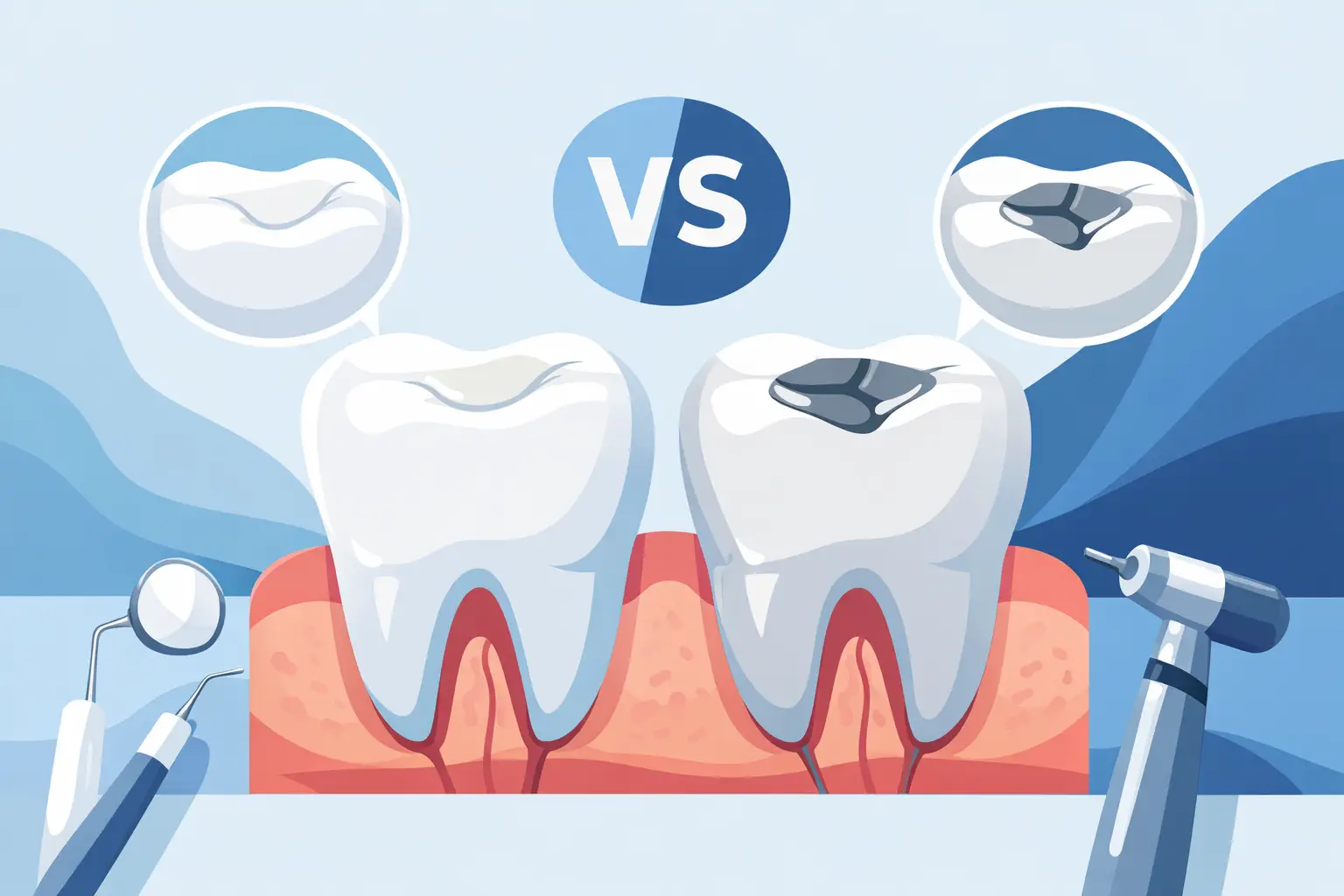
When a tooth needs a filling, ask how much healthy tooth remains and where the filling will sit. A large filling in a back tooth faces different demands from a small filling near the front.
For many people, a tooth coloured composite filling is the preferred option because it blends in naturally and can often be placed conservatively. Amalgam still has a place in selected situations, particularly in heavily loaded back teeth. A careful examination allows your dentist to explain the real trade-offs, so you can make an informed decision without feeling rushed.
What is the difference between composite and amalgam fillings?
Tooth coloured fillings are usually made from composite resin, a durable material that can be shaded to match your natural enamel. The dentist prepares the decayed or damaged area, applies the composite in small layers, and hardens it with a curing light. Because composite bonds to the tooth, it may allow the dentist to retain more healthy structure in some cases.
Amalgam is a silver-coloured filling material that has been used in dentistry for many decades. It is made from a blend of metals, including mercury combined with silver, tin and copper. Rather than bonding to the tooth in the same way as composite, an amalgam filling is held in place by the shape of the prepared cavity. This can sometimes mean more tooth structure needs to be removed to create adequate retention.
Both materials are designed to restore function. The better choice depends on the individual tooth, not a one-size-fits-all rule.
Tooth coloured fillings vs amalgam: appearance and tooth preservation
The cosmetic difference is clear. Composite can be carefully matched to the colour of your tooth, making it a popular choice for visible front teeth and for back teeth where patients would prefer not to show a dark filling when they laugh or talk. Modern composites can look very natural when placed with care.
Appearance is only part of the appeal. With a small or moderate cavity, composite bonding can support a minimally invasive approach because the dentist may only need to remove decay and weakened material. Preserving healthy enamel and dentine matters. Natural tooth structure is stronger than any filling material, and retaining it helps keep future treatment options open.
That said, composite is technique-sensitive. The tooth needs to be kept dry while the filling is placed. If moisture from saliva affects the bonding process, the seal may not be as reliable. This is one reason a dentist may recommend a different material, or suggest a larger restoration such as an onlay or crown when there is too little sound tooth left for a filling to be dependable.
Amalgam does not match the natural tooth colour and can darken in appearance over time. It may also make a tooth look greyish around the edges. For patients who value a discreet restoration, that is often a deciding factor.
Strength, wear and longevity
Amalgam has a long clinical history and can tolerate heavy biting forces well. It has traditionally been used in large fillings in molars, particularly where keeping the area completely dry is difficult. In the right situation, it can provide reliable service for many years.
Composite materials have improved significantly. A well-designed tooth coloured filling in a small to medium-sized cavity can be durable and functional, including in back teeth. However, a very large composite filling may be more prone to wear, edge breakdown or fracture over time, especially if you clench or grind your teeth.
The size of the filling is often more important than the material alone. If a cavity or old filling has taken up a large portion of the chewing surface, the remaining tooth walls may flex and crack under pressure. In that situation, continually replacing a large filling may not be the most conservative choice. An onlay or crown that protects the weakened cusps may offer a more predictable long-term result.
A filling's lifespan also depends on your bite, daily oral hygiene, diet and regular dental reviews. Decay can form at the margin of any filling if plaque is allowed to build up, regardless of which material was used.
Are amalgam fillings safe?
This is a common and reasonable question. Dental amalgam has been extensively researched and has a long history of use. It releases very small amounts of mercury vapour, particularly during placement and removal, but major dental and health authorities consider existing amalgam fillings safe for most people.
There are circumstances where a dentist may discuss alternatives, including during pregnancy, for people who are breastfeeding, or where specific medical considerations apply. These decisions should be individualised and made in consultation with your dentist and, where appropriate, your medical practitioner.
If you have an existing amalgam filling that is sound, comfortable and free from decay or cracks, it does not automatically need to be replaced. Removing a serviceable filling takes away additional tooth structure and temporarily increases exposure to material during the procedure. Replacement is usually considered when there is decay around the filling, a fractured tooth or filling, leaking edges, ongoing sensitivity, or a genuine cosmetic concern.
What about cost?
The cost of a filling is influenced by more than the material used. The number of surfaces being repaired, the depth of decay, access to the tooth, time required and whether additional treatment is needed all affect the fee.
Composite fillings can cost more than amalgam because they require detailed shade matching, careful layering and strict moisture control. However, choosing the least expensive option at the outset is not always the best value if it does not suit the tooth. A repair that fails early, or leaves a weakened tooth vulnerable to cracking, can lead to more extensive treatment later.
Your dentist should provide a clear treatment plan and discuss expected costs before starting. If more than one option is clinically suitable, you should understand the advantages, limitations and likely long-term maintenance of each.
When a tooth coloured filling is often a good choice
Composite may be particularly suitable for small to medium cavities, chipped front teeth, replacement of a visibly worn filling, and teeth where preserving healthy structure is a priority. It is also useful for small repairs that can be completed precisely without committing the tooth to a larger restoration.
For many families in Thornleigh, the appeal is straightforward: a conservative repair that looks like a natural part of the tooth. For nervous patients, knowing that the plan is focused on repairing only what is needed can make treatment feel more manageable.
When amalgam or another option may be recommended
Amalgam may still be discussed for a heavily loaded back tooth, especially where isolation is difficult or a restoration needs to tolerate significant force. In other cases, neither composite nor amalgam will be the ideal answer. A tooth with extensive decay, a deep crack, or very little remaining healthy structure may need a different approach to avoid repeated repairs.
This is where careful diagnosis matters. X-rays, an assessment of your bite and a close look at the remaining tooth structure help determine whether a filling is truly enough. The aim should be to avoid both under-treating a weak tooth and recommending a crown before it is necessary.
Making a decision you can feel comfortable about
There is no need to choose based on appearance alone, or to replace old amalgam fillings simply because they are old. The right restoration is the one that manages decay or damage, protects as much natural tooth as possible, and suits your health needs, bite and budget.
At Pure Dental Care, the conversation starts with what is happening in your mouth and what you want from treatment. A gentle, careful assessment can give you clarity on whether a tooth coloured filling, amalgam replacement or another restoration is appropriate. The most helpful next step is a check-up before a small problem has the chance to become a larger one.
Related at Pure Dental Care: Tooth fillings and contact our Thornleigh clinic.