
How Are Wisdom Teeth Removed Safely?
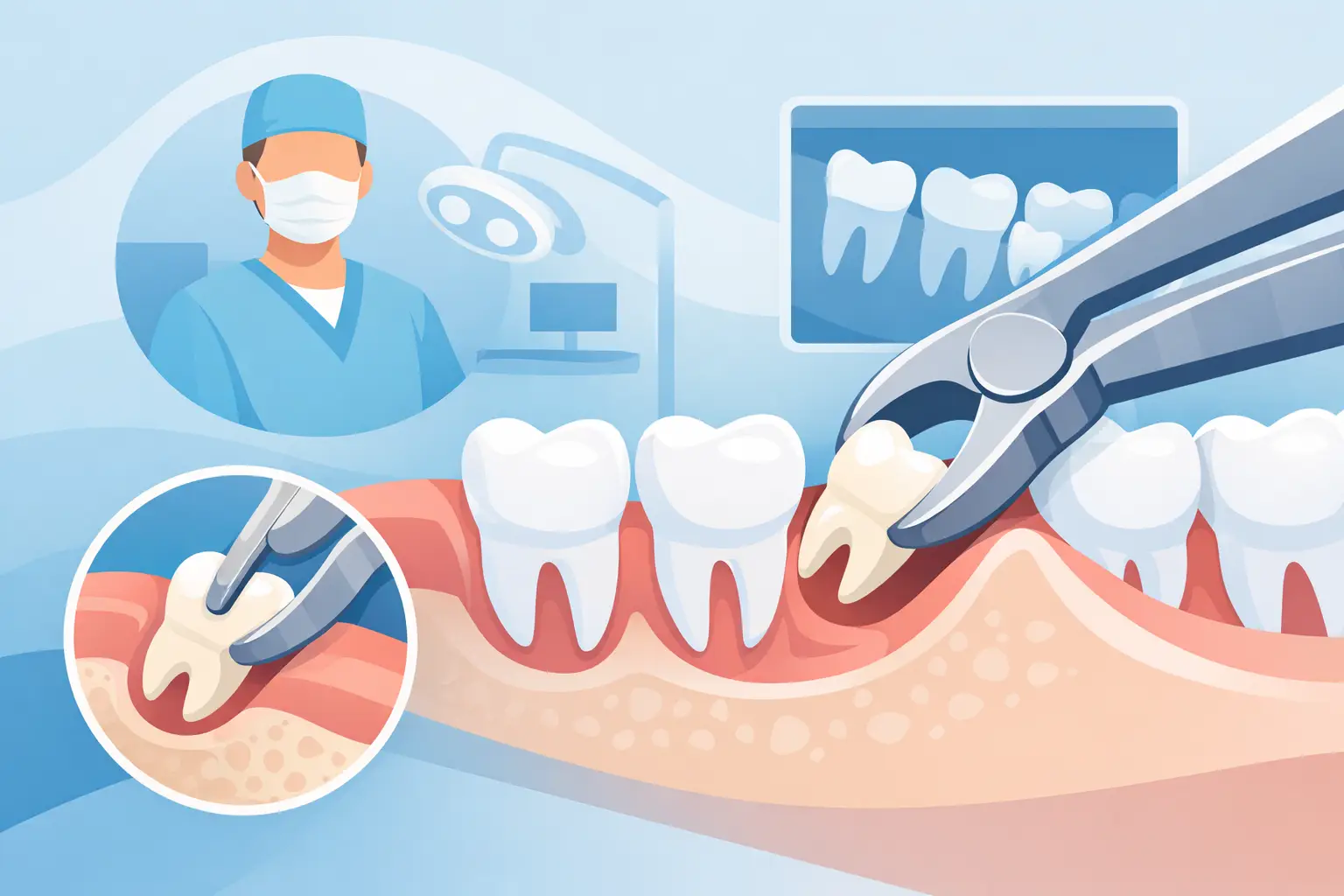
Some wisdom teeth can be removed with a standard extraction. Others need surgery because of their position or because they haven’t fully come through. An examination and, where appropriate, an X-ray help your dentist decide which approach fits.
For many patients, the unknown is the hardest part. They want to know whether it will hurt, whether they will be asleep, how long it takes, and how much swelling to expect afterwards. A good dentist will slow things down, explain your options clearly, and recommend the least invasive treatment that is likely to solve the problem well.
How are wisdom teeth removed?
Wisdom teeth are the last molars at the back of the mouth. Some come through normally and never cause trouble. Others stay partly trapped under the gum, grow at an angle, press against the tooth in front, or become difficult to keep clean. That is usually when removal is discussed.
The process starts with an examination and imaging. Your dentist will check the position of the tooth, the shape of the roots, the condition of the surrounding gum, and how close the lower wisdom teeth sit to important nerves. In many cases, an OPG X-ray is enough. If the tooth is in a more complex position, 3D imaging may be recommended to plan the extraction more precisely.
Once the tooth has been assessed, removal generally falls into one of two categories. A simple extraction is used when the wisdom tooth has erupted enough to be grasped and gently loosened. A surgical extraction is used when the tooth is impacted, partly covered by gum, buried in bone, or awkwardly angled.
Simple removal versus surgical removal
If a wisdom tooth is fully visible and accessible, the dentist can often numb the area with local anaesthetic, loosen the tooth with specialised instruments, and remove it in one piece. Patients usually feel pressure rather than pain. This kind of extraction is often quicker and the recovery is usually more straightforward.
Surgical removal is different, but not necessarily alarming. It simply means the dentist needs to make a small opening in the gum to reach the tooth properly. Sometimes a small amount of bone is removed around the tooth. In some cases, the tooth is divided into sections so it can be taken out more gently rather than forcing it out all at once. This approach is often kinder to the surrounding tissues and can reduce unnecessary trauma.
Lower wisdom teeth are more likely to need surgical removal because they are commonly impacted. Upper wisdom teeth can also be awkward, especially if they have over-erupted, tilted, or are difficult to access because of their position at the very back.
What happens on the day
The appointment begins with making sure you are comfortable and that the plan is clear. If you are having treatment under local anaesthetic, the area is numbed thoroughly first. You may feel a pinch from the anaesthetic and then pressure during the extraction, but you should not feel sharp pain. If you are especially anxious, your dentist may discuss additional options to help you feel more relaxed, depending on the complexity of the case and the setting.
Once the tooth is removed, the site is cleaned and checked carefully. If the extraction was surgical, stitches may be placed to help the area heal. Gauze is then placed over the socket and you will be asked to bite gently to encourage a blood clot to form.
For a straightforward extraction, the appointment may be fairly brief. For more difficult impacted teeth, it can take longer. The goal is not speed for its own sake. It is careful, controlled treatment that protects the surrounding teeth, bone and soft tissue.
Why wisdom teeth sometimes need to come out
Not every wisdom tooth should be removed. That matters, because conservative dentistry means avoiding treatment that is not necessary. If a wisdom tooth is healthy, fully erupted, easy to clean, and not causing damage, monitoring may be the better option.
Removal is more commonly recommended when there is repeated infection around the tooth, pain, decay, gum disease, food trapping, damage to the neighbouring molar, cyst formation, or not enough room for the tooth to come through properly. Sometimes the problem is obvious because the area is sore and swollen. Other times it is found early on an X-ray before bigger issues develop.
There is no one-size-fits-all rule. Age, medical history, root development, symptoms, and the exact position of the tooth all influence the decision.
Will wisdom tooth removal hurt?
This is the question most people really mean when they ask how are wisdom teeth removed. During the procedure itself, the aim is for you to be numb and comfortable. Pressure, pushing and some vibration are normal sensations. Pain is not something you should be expected to put up with.
After the numbness wears off, some soreness is normal. The amount varies. A simple upper wisdom tooth might settle quickly, while an impacted lower wisdom tooth can cause more swelling and jaw stiffness for a few days. Most people manage this with the aftercare advice and pain relief recommended by their dentist.
If you have had a bad dental experience before, it is worth saying so. Feeling informed, comfortable and in control can make a big difference to how manageable the appointment feels.
Recovery after wisdom tooth removal
Healing starts with protecting the blood clot in the socket. If that clot is disturbed too early, the area can become very painful. That is why patients are usually advised to avoid smoking, vigorous rinsing, straws and hard physical exertion in the first day or so.
Swelling tends to peak around the second or third day, then gradually improve. Bruising can happen, especially after a surgical extraction, though not everyone gets it. Soft foods are usually easier at first, and good oral hygiene remains important, even if you need to clean the area more gently.
Most people can return to usual daily activities quite soon, but recovery is not identical for everyone. If several wisdom teeth are removed at once, or if the teeth are deeply impacted, you may need a little more downtime.
Signs you should call the dentist
Some discomfort and swelling are expected. What is not expected is worsening pain after a few days, heavy bleeding that does not settle, difficulty swallowing, fever, or swelling that keeps increasing rather than easing. Those signs deserve a review.
Dry socket is one possible complication, particularly after lower wisdom tooth removal. It happens when the clot breaks down too early and the socket is left exposed. It is treatable, but it is much easier on patients when they know what to watch for and can get help promptly.
Do all wisdom teeth need to be removed at once?
Not always. Some patients only need one problematic tooth removed. Others are advised to remove two or four because they are all likely to cause trouble or because it makes sense to deal with them in one planned visit. There are trade-offs either way.
Removing all wisdom teeth together can mean one recovery period rather than several. On the other hand, if only one tooth is currently causing problems and the others are healthy and stable, monitoring the rest may be reasonable. The right approach depends on your symptoms, imaging and preferences.
When a referral may be needed
Some wisdom teeth can be removed comfortably in a general dental clinic. Others are better managed by an oral surgeon, particularly if the roots are very close to a nerve, the tooth is deeply impacted, or your medical history adds complexity. Good care is not about insisting every case is simple. It is about planning properly and recommending the setting that is safest for you.
At Pure Dental Care, that planning starts with careful diagnosis and a calm conversation, not pressure. For patients in Thornleigh and nearby suburbs, that can be especially reassuring when a painful wisdom tooth needs prompt attention but the treatment still needs to be thought through properly.
How are wisdom teeth removed with less stress?
The technical steps matter, but the patient experience matters too. The best wisdom tooth removal is not just about getting the tooth out. It is about making sure you understand why treatment is recommended, what your options are, what the risks and benefits look like, and what recovery is likely to involve.
That kind of approach helps nervous patients feel less cornered and more prepared. It also leads to better decisions. Sometimes the answer is to remove the tooth now. Sometimes the wiser choice is to monitor it, treat an infection first, or plan the extraction at a time that suits your health, work and family commitments.
If your wisdom tooth is sore, swollen, or repeatedly flaring up, getting it checked early usually gives you more options and a calmer path forward.
Related at Pure Dental Care: Wisdom teeth removal and contact our Thornleigh clinic.