

Dental Technology for More Comfortable Care
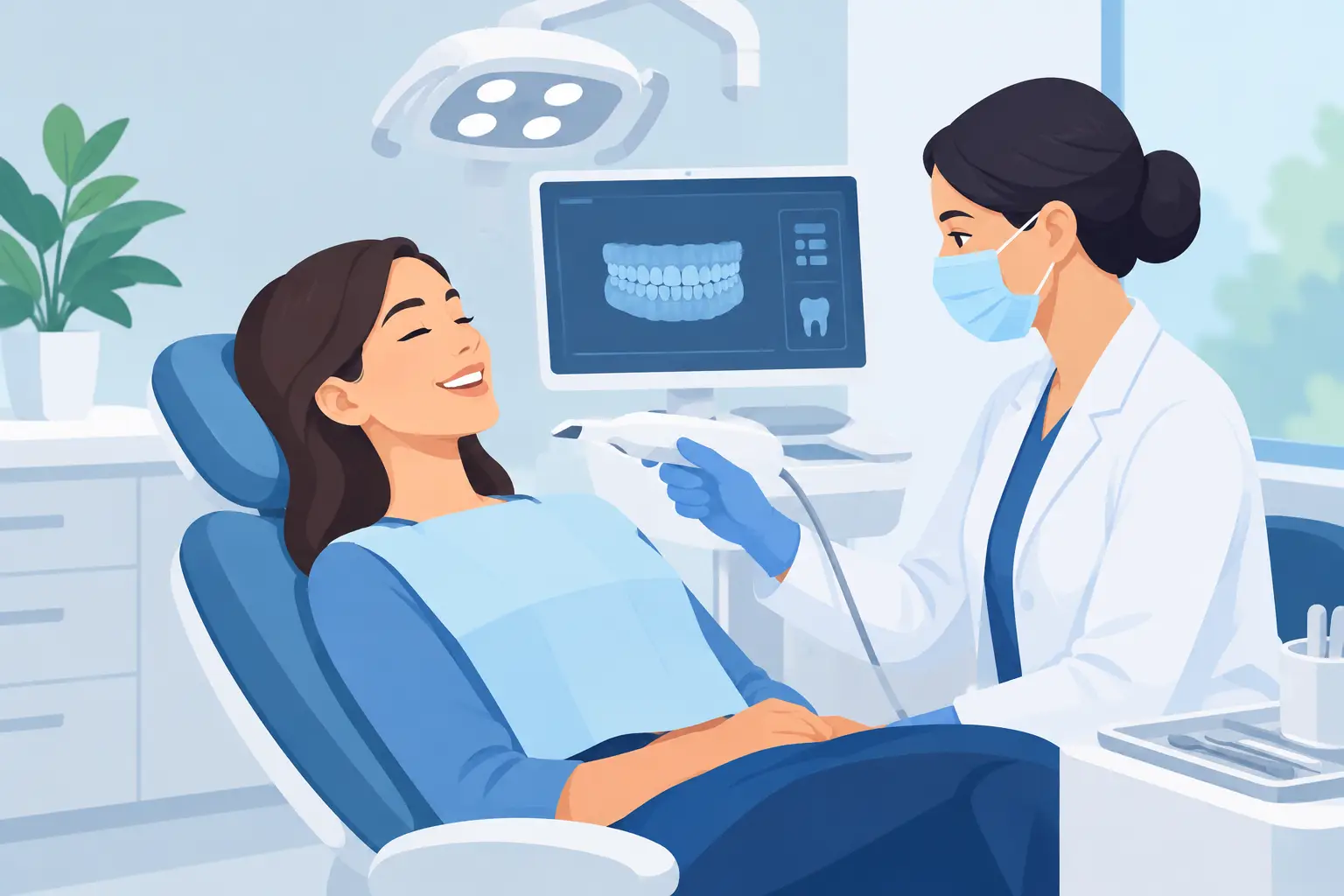
At Pure Dental Care in Thornleigh, we use photos, X-rays or 3D scans where appropriate to show you what we find. Ask us to point out the area we’re concerned about and explain how it affects your options.
For many people, especially those who have put off seeing a dentist because of a difficult past experience, modern equipment can make care feel less intimidating. A small camera or digital scan is not there to overwhelm you with technical information. It is there to give you a clearer picture of your oral health and a genuine opportunity to ask questions before deciding how to proceed.
Dental technology should support, not rush, treatment
The best technology is useful because it improves clinical decisions, not because it makes treatment more complicated. A detailed image may reveal an issue at an early stage, when a smaller and more conservative option could be appropriate. Just as importantly, it may show that a tooth can be monitored rather than treated straight away.
This distinction matters. Good dentistry is not about doing the biggest procedure possible. It is about understanding the condition of each tooth, your gums and your bite, then discussing sensible options based on your needs, health and priorities. Technology provides valuable information, but your dentist's examination, experience and clinical judgement remain essential.
At Pure Dental Care, advanced diagnostics are used alongside a careful examination and a conversation about what you are experiencing. If you are nervous, need time to think, or simply want a clearer explanation, you should never feel rushed.
Digital imaging makes problems easier to see and explain
Traditional dental X-rays have long been an important part of diagnosis. Digital imaging builds on this by producing detailed images quickly and allowing them to be viewed clearly on screen. Your dentist can use these images to assess areas that cannot be seen during a normal visual examination, such as between teeth, beneath existing fillings or around the roots of teeth.
Digital images can assist with identifying early decay, signs of gum disease, infection, changes around a tooth root and issues affecting developing teeth in children. They can also help your dentist track a known concern over time. That comparison can be reassuring: not every mark or change needs immediate treatment.
X-rays are recommended only when clinically appropriate. The type and frequency depend on factors such as your age, past dental history, risk of decay, gum health and any symptoms you have. For a patient with a stable mouth and low risk, imaging needs may differ from someone experiencing pain, recurring decay or a sudden change in their oral health.
Seeing is often easier than imagining
When a dentist points to an image and shows you the area of concern, the discussion becomes more concrete. Rather than being asked to accept a recommendation without context, you can see why a filling, root canal treatment, gum treatment or further investigation has been suggested.
This visual approach is particularly helpful for parents. It can make a child's dental visit feel educational rather than frightening, and it gives families a clearer understanding of prevention at home. For adults with dental anxiety, seeing the reason behind a recommendation can replace uncertainty with a sense of control.
3D scans can improve planning for complex care
A standard X-ray is a flat, two-dimensional image. In some situations, a 3D scan provides a more complete view of teeth, bone, roots and nearby structures. This can be particularly useful when a dentist needs to assess the position of wisdom teeth, investigate complex root canal anatomy, evaluate jaw concerns or plan certain orthodontic treatments.
The advantage is not simply more information. It is more relevant information when a case calls for it. A 3D view can help your dentist assess relationships that may not be obvious on a standard image, supporting safer and more accurate planning.
However, a 3D scan is not necessary for every appointment or every treatment. It should be recommended for a specific clinical reason. Asking why a scan is being suggested, what it will help clarify and how it may affect your treatment plan is entirely reasonable. A patient-first practice will welcome those questions.
Digital scanning can make dental impressions more comfortable
Many people remember traditional dental impressions as one of the least pleasant parts of dentistry. The thick impression material could feel bulky, trigger a gag reflex and require patients to sit still while it set.
Digital scanning offers an alternative for many treatments. A small handheld scanner captures detailed images of your teeth and bite, creating a digital model without the need for conventional moulds in suitable cases. The process is usually more comfortable, and the images can be checked immediately for accuracy.
Digital scans may be used when planning clear aligners, braces, crowns, bridges, bite splints and other custom-made dental appliances. They can also be helpful for monitoring tooth movement or changes in wear over time. For patients with a strong gag reflex, this may make a meaningful difference to their experience.
There are still occasions where conventional methods may be preferred or needed. The right approach depends on the procedure, the condition of your teeth and what will deliver the most reliable result. Comfort matters, but so does accuracy.
Technology can support earlier, more conservative care
One of the most valuable roles of dental technology is helping dentists spot changes sooner. Early signs of decay, tooth wear, cracks or gum problems can be easier to manage when they are identified before they cause pain or progress further.
That does not mean every early finding needs intervention. Sometimes the most appropriate plan is prevention: improving brushing technique, adjusting diet, using fluoride products, managing dry mouth, protecting teeth during sport or monitoring an area at future check-ups. In other cases, early treatment can preserve more healthy tooth structure than waiting until the problem becomes larger.
This is where regular check-ups are useful. They create a baseline for your oral health, so changes are easier to identify. A single appointment is a snapshot; a series of carefully recorded visits helps your dentist understand the bigger picture.
Comfort also comes from better communication
Technology can improve the experience of care, but kindness and communication remain just as important. A high-definition image does not help much if you are not given time to understand it. A digital scan cannot replace a dentist who listens when you say you are worried, sensitive or uncertain.
Before treatment begins, you should know what has been found, what options are available, what each option involves and what may happen if you choose to monitor the issue. You may prefer to address an urgent concern first and plan other work later. You may need extra breaks, a slower explanation or reassurance during treatment. These are valid needs, not inconveniences.
For nervous patients, it can help to tell the dental team early that you feel anxious. Simple arrangements, such as agreeing on a hand signal for a pause or talking through each step before it happens, can make a visit feel far more manageable.
Questions worth asking about dental technology
You do not need to understand every technical detail to take an active role in your care. A few straightforward questions can help you make an informed decision:
What is this image or scan showing?
Why is it recommended for my particular situation?
Will it change the treatment plan or help rule something out?
Are there conservative options to consider first?
What happens if we monitor this area instead?
A clear answer should leave you better informed, not pressured. The purpose of modern dental technology is to support careful diagnosis and tailored care, giving you and your dentist a stronger foundation for decisions that protect your smile over the long term.
If it has been a while since your last check-up, you do not need to wait for pain to make an appointment. A calm assessment, supported by the right technology when needed, can be a practical first step towards feeling confident about your oral health again.
Related at Pure Dental Care: Meet Dr Youstina Gad and contact our Thornleigh clinic.