
A Tooth Preservation Case Study That Saved a Molar
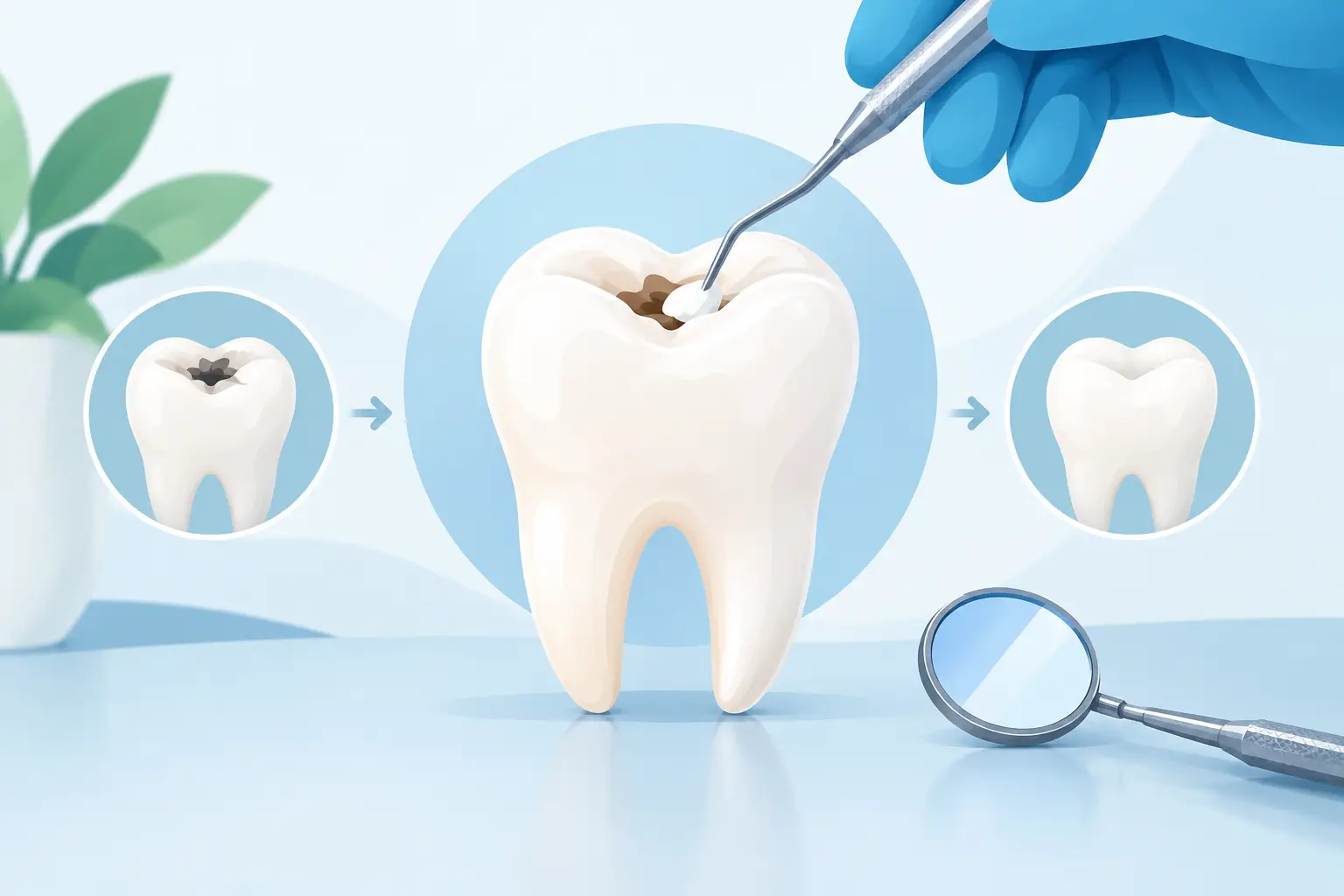
This illustrative example follows a painful, cracked molar from assessment through treatment. It explains what a dentist checks before deciding whether a tooth can be repaired or needs removal.
The details have been adapted to protect privacy, and every mouth is different. Still, the clinical decisions in this example reflect the conservative approach many patients are looking for: preserve healthy natural tooth structure where possible, explain the options clearly, and only recommend more extensive treatment when it is genuinely needed.
The problem: pain in a heavily filled molar
The patient was an adult who had put off a check-up after noticing occasional sensitivity in a lower back tooth. The tooth had a large, older filling placed years earlier. At first, discomfort only appeared with cold drinks. Over several weeks, it progressed to a sharp pain when chewing, followed by a dull ache that lingered afterwards.
This pattern can point to several issues. A filling may have leaked around its edges, decay may have developed beneath it, the tooth may be cracked, or the nerve inside the tooth may be inflamed. These possibilities can feel worrying, particularly for someone who has had a difficult dental experience in the past. They also cannot be safely sorted out by symptoms alone.
At the appointment, the dentist first listened to what the patient had noticed: where the pain occurred, whether it woke them at night, and whether hot, cold or pressure triggered it. The tooth and surrounding gums were then examined, with bite testing and targeted X-rays used to assess the roots, bone and area beneath the existing filling.
The findings were reassuring in one important respect. Although there was deep decay and a crack extending through part of the remaining tooth, the tooth was not split beyond repair. The roots were stable, the supporting bone was healthy, and there was enough sound structure remaining to consider saving it.
Tooth preservation case study: the treatment choices
At this point, extraction was one option, but it was not the only option or necessarily the best first choice. Removing a tooth can be appropriate when a crack runs too far below the gum line, when decay leaves too little tooth to restore, or when infection and bone loss make the outlook poor. However, extraction also creates a gap that may affect chewing and allow neighbouring teeth to move over time.
Replacing a missing molar with an implant, bridge or removable denture can be a good solution, depending on a patient’s health, bone levels, budget and goals. Yet replacement involves its own treatment, cost and maintenance. When a natural tooth has a reasonable long-term outlook, keeping it is often worth considering first.
For this molar, the realistic options were discussed in plain language:
remove the old filling and decay, assess the crack fully, then restore the tooth if the nerve remained healthy;
provide root canal treatment if the nerve was irreversibly inflamed or infected, followed by a protective restoration; or
remove the tooth if the crack or decay proved too extensive once the tooth was cleaned.
The patient chose to proceed step by step. This meant no promise was made before the extent of damage could be seen clearly. It also gave the patient control: if the tooth was found to be unrestorable, the next conversation would focus on replacement choices rather than pushing ahead with treatment that had little chance of lasting.
Step one: remove decay without removing more tooth than necessary
The old filling was carefully removed under local anaesthetic, along with the decayed tissue beneath it. Local anaesthetic is highly effective for most people, and the patient was encouraged to signal at any point if they needed a break. A calm pace is not just about comfort. It helps the dentist work precisely and helps an anxious patient feel informed, comfortable and in control.
Once the tooth was cleaned, the crack was easier to inspect. It did not extend into the root, but the decay had reached the nerve. The tooth could still be saved, but it required root canal treatment.
Root canal treatment is often misunderstood as something to fear. In practical terms, it involves removing inflamed or infected nerve tissue from inside the tooth, disinfecting the small internal channels and sealing them to reduce the risk of reinfection. The aim is to keep the outer tooth and roots in place, allowing the patient to continue using their natural tooth.
It is not always a one-visit procedure. The number of visits depends on the tooth, the complexity of its roots, the degree of infection and how the patient is feeling. In this case, treatment was completed over two appointments. A temporary restoration protected the tooth between visits, and the patient was given clear advice about what to expect once the numbness wore off.
Step two: protect the tooth after root canal treatment
Saving the nerve space is only part of saving a tooth. Back teeth handle substantial chewing forces, and this molar had already lost a significant amount of its natural structure. Without protection, a weakened tooth can fracture, sometimes leaving it impossible to restore.
For that reason, the final stage was a custom-made crown. A crown covers the remaining tooth structure and redistributes biting forces. It is not automatically required after every root canal, especially in front teeth with plenty of healthy structure, but it is commonly recommended for heavily filled molars because the risk of fracture is higher.
Digital scanning was used to create an accurate model of the tooth, avoiding the need for conventional impression material for many patients. The dentist also checked the bite carefully before and after fitting the crown. Even a well-made restoration needs to sit comfortably within the way a person naturally closes their teeth.
The result was a tooth that looked natural, felt comfortable to chew on and remained part of the patient’s own dentition. That does not mean it became indestructible. A crowned, root-treated tooth still needs regular review, good home care and protection from habits such as grinding. But it gave the patient a conservative way forward without immediately moving to extraction and replacement.
Why diagnosis changes the outcome
The most useful lesson from this case is not that every sore molar can be saved. Some cannot, and delaying necessary extraction can allow pain, infection or damage to worsen. The lesson is that a decision as permanent as removal deserves a proper assessment.
Symptoms can be misleading. A small crack may produce severe pain, while extensive decay can cause very little discomfort until it reaches the nerve. X-rays provide valuable information, but not every crack appears on an X-ray. The clinical examination, tests, images and the patient’s own description all work together.
At Pure Dental Care, this careful planning is central to conservative dentistry. The question is not simply, “Can we do a crown, root canal or implant?” It is, “What does this tooth need now, what are the alternatives, and what gives this patient the clearest path to long-term oral health?”
What patients can do to preserve natural teeth
Tooth preservation often begins before a tooth becomes painful. Regular check-ups can identify early decay around old fillings, cracks, gum disease and bite problems while smaller, less invasive treatments may still be possible. Professional cleans also help manage the plaque and tartar that contribute to gum disease, which can threaten the support around otherwise healthy teeth.
At home, brush twice daily with fluoride toothpaste, clean between teeth each day and avoid using teeth to open packets or bite hard objects. If you wake with jaw tension, headaches or signs of tooth wear, ask about grinding and whether a bite splint may help protect your teeth and restorations.
Most importantly, do not assume a painful tooth is already beyond saving. A timely appointment can provide answers, relief and genuine choices. Whether the right next step is a small filling, root canal treatment, a crown or removal, you deserve an explanation that is gentle, clear and never rushed.
Related at Pure Dental Care: Root canal treatment and contact our Thornleigh clinic.